
Cycle Tour | Circumnavigation of the Iberian Peninsula, Including the Med. Coasts of S. France & S. Italy | Stage #6
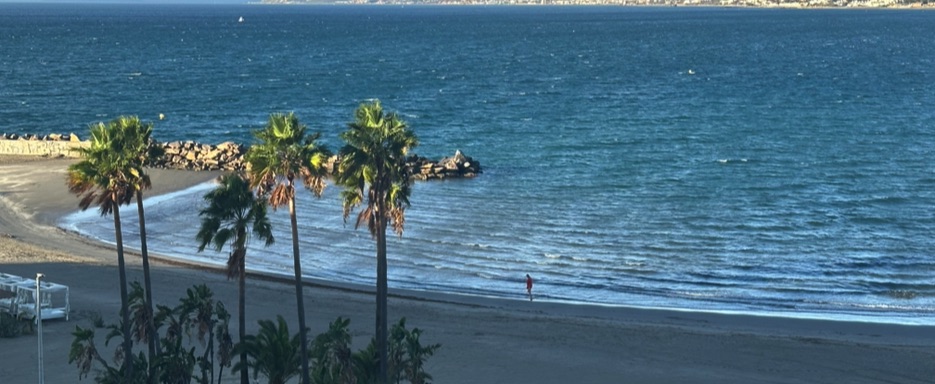
Stage 6: From Portugal’s Ayamonte to Tarifa via Huelva, Seville & the Strait of Gibraltar
Southern Spain: Andalusia – Sun, Wind & History
Crossing from Ayamonte, Spain, I entered Andalusia, a land of vibrant culture, white villages, and endless sun. The road led me through Huelva, where the Atlantic breeze carried the scent of salt and citrus groves.
In Seville, the city’s heartbeat was unmistakable: the grandeur of the Alcázar, the soaring Cathedral, the labyrinthine streets of Santa Cruz, and the iconic Plaza de España made every stop a feast for the senses. Pedaling through its sunlit streets, I felt immersed in the rhythm and history of Andalusia.
Further south, I approached Tarifa, Europe’s southernmost point. With the wind at my back and the continent of Africa visible across the Strait of Gibraltar, this was a symbolic and exhilarating milestone the southern tip of my Iberian circumnavigation.
ROUTE STAGES WITH GOPRO VIDEOS
Stage 6 - Day 40 I Villsom camping Sevilla, Sevilla → Camping Playa Las Dundas, El puerto De Santa Maria (Costa de la Luz I Spain 📍 MAP
This morning I woke up beneath a completely blue sky. After folding up my tent and loading the panniers onto the bike racks, I headed to the campsite restaurant for breakfast. A cheerful and friendly lady served me a cappuccino and toast with tomato jam a simple but perfect start to the day.
Outside, near where I had parked my bike at the entrance, I met an English cyclist who was also on a long tour. Unfortunately, he was stuck here for a few days waiting for a replacement bike part to arrive from England. We wished each other good luck before I set off again.
Leaving Camping Villsom in Dos Hermanas, in the region of the Lower Guadalquivir, I first followed a flat cycle path that soon merged with the wider Andalusian road network also pleasantly flat and offering ample space for bicycles.
The ride unfolded through landscapes dominated by farmland, with vast stretches of cotton fields shimmering under the sun. Not far from here lies Doñana National Park, one of Europe’s most important wetlands. Spreading across the provinces of Huelva, Seville, and Cádiz, the park sits along the right bank of the Guadalquivir River, which flows all the way from Seville to its mouth in the Atlantic.
I followed a route that skirted a series of towns Los Palacios y Villafranca, Las Cabezas de San Juan with its whitewashed houses glowing against the blue sky, then Lebrija, Trebujena, and finally Sanlúcar de Barrameda on the left bank of the Guadalquivir, opposite Doñana. Entering each would have cost me too much time, so I admired them from the road and kept moving.
The scenery remained strikingly beautiful: corridors of cotton plantations stretched to the horizon, their white tufts shimmering in the breeze, while the road itself was almost deserted. It was along this peaceful, quiet stretch that I finally reached El Puerto de Santa María, a town on the Costa de la Luz overlooking the Bay of Cádiz.
El Puerto is historically tied to Christopher Columbus, who prepared parts of his voyages to the Americas here. For me, it also carried a sense of déjà vu I had visited once before during a cycling trip commemorating the 500th anniversary of Columbus’s first expedition.
My destination for the night was Camping Playa Las Dunas, nestled in the pine forests of the Dunas de San Antón. After checking in, I pitched my tent on a sandy plot, stored my gear, and set out to explore. The campsite was vast, with winding paths and pitches arranged in harmony with the surrounding nature. In the quiet of the low season, the shop, café-restaurant, and swimming pools were closed, which only added to the calm, almost secluded atmosphere..
I lost my way while wandering through the vast campsite, but eventually I found the exit and strolled to the seafront at Playa La Puntilla—a long golden beach lined with restaurants. Later, I stopped at a supermarket, then returned to my tent for dinner, surrounded by the quiet of mostly empty pitches..
As the evening settled, I checked tomorrow’s route on Google Maps and Komoot, sent a few messages to family and friends, and finally let fatigue carry me into sleep, lulled by the calm of the pine-scented night.
Stage 6 – Day 41 | Playa Las Dunas Campsite, El Puerto de Santa María → Hostal El Levante, Tarifa (Costa de la Luz, Spain) 📍 MAP
Another sunny day began peacefully among the fragrant coastal pines where I had pitched my tent the night before. My morning routine felt a little incomplete today no breakfast, since the coffee place just outside the campsite was still closed when I left a bit too early.
Not far from the exit, I stopped to take a photo of my bike leaning against a bench. Behind it, the words “El Puerto de Santa María” were framed by a large heart. Since I truly love my bike, it felt like the perfect shot, as if the city itself had left a message of affection for my faithful companion.
From here, I could have boarded the Catamarán Bahía Cádiz ferry, a 30 minute crossing across the bay that also accepts bicycles. But since tickets are limited and need to be reserved in advance, I decided instead to keep things simple and follow the coast by bike.The choice was rewarding.
The bike path led me along Cádiz’s waterfront, where the morning light shimmered over Playa La Puntilla. The Atlantic was glassy and calm, dotted with moored boats. A long bridge stretched across the horizon while whitewashed houses gleamed in the background.
After passing through the historic center of El Puerto de Santa María, a few kilometers down the road I came across a striking white sculpture of a cyclist with a plaque reading “Glorieta de los Ciclistas” a tribute, I believe, to a local Tour de France victory.
Shortly afterward, the road carried me into the serene beauty of the Bahía de Cádiz Natural Park, one of Europe’s most important coastal wetlands. Though the stretch was brief, it was enchanting, bordered by pines, low shrubs, and the aromatic vegetation of the coast.
Further along, I began spotting the black iron silhouettes of bulls once giant billboards for Osborne’s Brandy de Jerez, now preserved as a cultural icon of Spain.
The road started to rise and fall gently, weaving past farmland and hills scattered with wind turbines. From a hill near Puerto Real, facing Cádiz across the bay, one Osborne Bull stood proudly against the sky.
The afternoon took me past Conil de la Frontera and the hilltop town of Vejer de la Frontera before I finally reached Tarifa, the southernmost point of continental Europe. Here, where the Atlantic and the Mediterranean meet, the Isla de las Palomas juts into the sea, linked to the mainland by a narrow causeway that marks this spectacular geographical boundary.
My lodging for the night was just outside Tarifa: the welcoming Hostal El Levante, about two kilometers before town. It had the charm of a classic roadside motel—though much more inviting set amid greenery and complete tranquility. The terrace café was closed for the low season, but it was a quiet and safe place to leave my bike.
After checking in and dropping my gear, I took a short evening stroll, something I always enjoy after a long day in the saddle. Instead of heading into Tarifa, which I plan to explore tomorrow, I walked the 500 meters to Playa de los Lances. Its fine white sand stretched for seven kilometers toward Tarifa and Campo de Gibraltar, bathed in the soft light of evening.
Nearby, I found El Rancho, a warm and welcoming restaurant known for local meats—though luckily for me, their menu also included a hearty veggie burger, which made for the perfect dinner.
Back in my room, I opened Komoot and Google Maps to study the next day’s route. With a little thrill, I realized that tomorrow the Strait of Gibraltar awaited me the true gateway to a new chapter of this journey along Spain’s eastern coast. With that thought, I drifted off to sleep.
Stage 6 - Day 42 I Hostal El Levante, Tarifa (Costa de la Luz → San Luis De Babinillas ( Costa del Sol Occidental) I Spain 📍 MAP
I woke up to a bright, sunny day and felt a wave of relief. After days of rain in northern Spain, the true summer seemed finally to have arrived now that I was in the south.
After collecting my bicycle from the campsite café and strapping on my panniers, I was ready to set off. Just as I was about to mount, the two owners of the hostel a father and son came over to ask if I had enjoyed my stay.
I told them I had loved it, particularly because the place was surrounded by lush greenery and each room had its own private entrance, almost like a small apartment. They thanked me warmly, and with smiles exchanged, I pedaled away.
Eight kilometers later, a sign marked Tarifa, a windy town in Andalusia, Cádiz province. Known as the “city of wind,” it attracts windsurfers and kitesurfers from around the world.
After so many kilometers tracing the Iberian Peninsula, I finally arrived at Punta de Tarifa, the southernmost point of continental Europe, where the continent comes closest to Africa – just 14 kilometers across to Morocco.
The waterfront was calm and quiet. A few people strolled, others jogged. I paused to photograph Playa Lances Surf, a wide, magnificent beach with fine white sand. Despite its fame for wind sports, the waters were calm and the beach almost empty, a serene corner of paradise.
Leaving Punta de Tarifa behind, I climbed gradually along roads winding through the Parque Natural del Estrecho, where the Mediterranean meets the Atlantic. From the viewpoints at 330 meters above sea level, the vistas were breathtaking, with the coastline stretching into the mist in every direction.
At a small lookout, I admired sweeping views of Tarifa, the African coast across the Strait, and the merging of two seas. Then the road descended toward Algeciras, a busy port city, and onward to La Línea de la Concepción, bordering Gibraltar.
Crossing into Gibraltar was an unusual experience. Cars streamed through the border without a second glance, yet I was asked for my documents. The main road cuts across the local airport’s runway, and I cycled along it, taking photos of the city, the waterfront, and the Rock of Gibraltar, home to the Barbary macaques Europe’s only wild monkeys. Though I couldn’t see them today, I had visited them on a previous bike trip.
After a brief stop for a cold Coca-Cola, I returned to Spain and continued along the EuroVelo 8 coastal bike path, with continuous views of the imposing Rock and the Atlantic beyond.
I passed through a small nature reserve along the Guadiaro River estuary, then through San Roque, before reaching my final stop of the day: San Luís de Sabinillas, a charming town on the Costa del Sol.
In the afternoon, after checking into a cozy Bed & Breakfast, I strolled to the Sabinillas beach and its peaceful promenade. The marina was lined with bars, tapas spots, and restaurants. I stopped for a pizza at an Italian restaurant; the owner had moved here from Italy and was delightfully friendly. The locals were equally welcoming.
Back in my room, I followed my usual evening routine: checking that my devices were charging, messaging family and friends, and finally falling asleep, thinking about the excitement of continuing my ride east along the stunning southern coast.
Stage 6 – Day 39 I Hostal Toscano, San Juan del Puerto (Huelva) → Villsom Camping, Dos Hermanas (Sevilla), Spain 📍 MAP
had an early breakfast in my room at the Hostal Toscano, waiting for the first light of day before setting off under a clear sky.
The road out of San Juan del Puerto into the province of Huelva led me through wide expanses of farmland until I reached my first stop: Niebla. Perched on a hill above the Tinto River, this millenary village surprised me with its extraordinary Moorish walls, still remarkably intact, and a quiet, unspoiled historic center of winding streets and small squares. It was a delightful and uncrowded discovery, far beyond what I had expected.
From there, I continued through familiar landscapes of rolling farmland, skirting towns like Villarrasa and Villalba del Alcor. The wind swept across the fields, making the tall plants sway above me, while I shared the road with numerous local cyclists. I passed through Manzanilla, surrounded by agricultural land, and then Escacena del Campo, before entering the province of Seville.
Here the farmland stretched wide, the ripened cereals and herbaceous crops painting the countryside in bright golden and straw-yellow hues. I skirted Castilleja del Campo and Huévar del Aljarafe, then followed a scenic cycle path through Sanlúcar la Mayor and Espartinas.
The route continued smoothly via Camas and Triana Oeste before I crossed the Puente de la Señorita bridge and entered Seville, the capital of Andalusia.
Seville’s excellent cycling network allowed me to explore the historic center with ease. Highlights included the Alcázar, the Cathedral crowned by the Giralda tower, the Palacio de San Telmo, the Santa Cruz neighborhood, the Plaza de Toros, and the colorful district of Triana.
The moment I reached María Luisa Park, I felt as though I had stepped onto a film set. At its heart lies the Plaza de España, designed by architect Aníbal González.
This magnificent square, with its semicircular building of Andalusian brickwork, marble, and ceramics, left me in awe. Along the curved façade, tiled alcoves displayed mosaics and maps of Spain’s provinces, each adorned with coats of arms and scenes from history.
The towers, porticoes, ceramic bridges, and tranquil canal where tourists rowed small boats created an atmosphere both grand and serene.
The square’s beauty was overwhelming; I didn’t want to leave, certain it was one of the most spectacular places I had ever seen.
Eventually, I cycled another 15 kilometers south to Dos Hermanas, where I checked into Camping Villsom Sevilla.
After pitching my tent, I picked up dinner from a nearby supermarket. Though I could have returned to Seville for an evening stroll, I instead chose a quiet walk around the campsite, admiring the pool and restaurant before settling into bed.