
Cycle Tour | Circumnavigation of the Iberian Peninsula, Including the Med. Coasts of S. France & S. Italy Stage #5
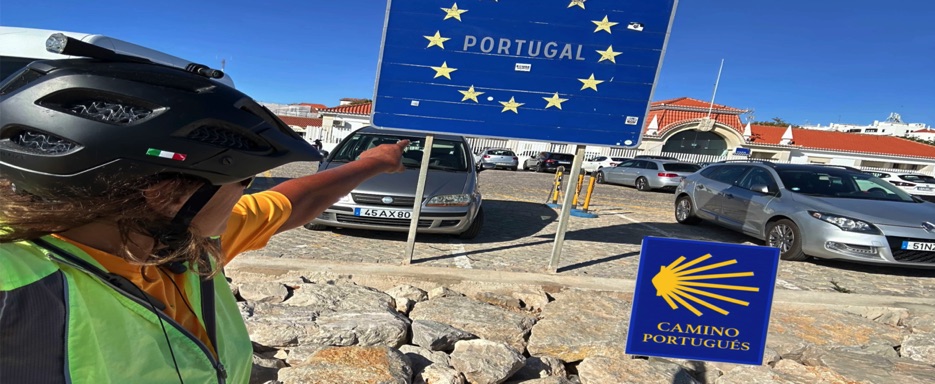
Stage 5: The Coastal Route of the Camino Portugués and the Algarve Coast
Southern Portugal & Algarve – Golden Beaches
The golden beaches of the Algarve marked my arrival in southern Portugal. The cliffs, caves, and sunsets made every kilometer unforgettable. Villages like Lagos and Tavira showcased the Algarve’s history, architecture, and natural beauty.
Tavira, Portugal, marked the end of Portugal, where a ferry carried me across the Guadiana River to Ayamonte, Spain, ready to enter Andalusia and continue the adventure along southern Spain.
ROUTE STAGES WITH GOPRO VIDEOS
ALGARVE COASTAL ROUTE FROM WEST TO EAST TO THE SPANISH BORDER IN THE CITY OF AYAMONTE
In this stage I will cycle the beautiful southern coastline of Portugal which I already knew since I had covered it on another cycling trip and which in any case it was nice to retrace it.
In this stretches runs The Atlantic Coast Route The Ecovia Litoral which is part of the Eurovelo 1 in the Algarve region.
The 220-kilometer cycle path that follows the entire coastline of the Algarve region, South Portugal that connects from the west Cabo de São Vincente (Sagres) to the west a Villa Real de St. Antonio on the border of Spain.
Upon arriving in the western part of the Agrarve the route takes in varied terrain from flat cycle paths to rolling hills and local roads with little traffic amidst the variety of Mediterranean landscapes and the many coastal boulevards profile passing through the towns of Lagos, Portimão, Lagoa, Almancil, Faro, Portimão, Olhão, Tavira and finally the town of Vila Real de Santo Antonio located to the east of the Agrarve where I took a short 15 minute ferry across the Guardiana River in Portugal to town of Ayamonte which belongs to the province of Huelva, Andalusia in Spain.
Stage #5 I Day 29 I Campismo de Belinho, Belinho - Parque del Campismo de Salgueiros, Vile Nova Gaia I Portugal 📍 MAP
This morning the sky was a pale, smoky yellow, the sun glowing red from distant wildfires. As I rolled up my sleeping bag with the tent flap open to the cool air, one of the campsite cats wandered in and kept me company for a few quiet minutes.
With my gear packed and the bike loaded, I sat at the outdoor tables for breakfast. The two cats followed me, and soon more appeared, lounging around as if we were old companions. I shared a little food with them, and when it was finally time to leave, two “escorted” me to the gate, as if seeing me safely on my way.
The first stretch was a quiet, flat road past Belinho and into Esposende, where I spotted Bikeseven Esposende (KTM). My gears had been sticking, so I stopped in. Paul, the owner and a cyclist himself, quickly fixed the problem, then waved off my attempt to pay with a smile: “Happy riding!” A small act of kindness I won’t forget.
Further along, I came to the Paulo Gonçalves Memorial a striking 5.5-meter sculpture of 27,500 mechanical parts, weighing 8 tons, built in memory of the Portuguese rally driver who died in the 2020 Dakar Rally.
Crossing the metal span of the D. Luís Filipe Bridge, I watched the Cávado River winding toward the Atlantic before rolling into the coastal town of Fão.
Southward, the route carried me past Póvoa de Varzim and Vila do Conde, where another bridge led me over the Ave River.
In the afternoon, near Leça do Balio, I took a quick break at McDonald's. To my surprise, the cashier added an ice cream to my order, a nice little treat on a hot day.
Finally, the hills of Porto rose ahead, crowned by the terracotta rooftops and the wide Douro River. The highlight was crossing the Dom Luís I Bridge, its double-deck metal arch offering sweeping views over Porto and Vila Nova de Gaia. From the upper level, where the yellow tram runs, the river shimmered below, framed by wine cellars and old stone houses.
Once in Gaia, I continued to Parque de Campismo de Salgueiros, my stop for the night, just 6 km from Porto’s heart.
After pitching the tent and gathering dinner supplies from a nearby supermarket, I still had time to ride the coastal paths and watch the evening light fade over the beaches.
It was a day filled with cats, kind strangers, and unforgettable river views a reminder of how simple moments can turn a journey into a story worth keeping.
Stage #5 I Day 30 I Salgueiros Camping Park, Vila Nova Gaia - Mira Municipal Camping Park, Praia De Mira I Portugal 📍 MAP
This morning I woke to find the rain had finally stopped. The night had been damp but gentle, just enough to leave the air cool and fresh. I packed quickly, loaded the bike, and rolled down to the Vila Nova de Gaia waterfront. At a café overlooking the ocean, I enjoyed a quiet breakfast before setting off.
The EuroVelo 1 carried me south on a mix of bike paths, shared lanes, and short stretches of road. The riding was easy and flat, the Atlantic a constant companion.
Past Espinho, I stopped in Silvalde, where by pure coincidence I ended up in front of a Burger King. It wasn’t part of the plan, but it made a convenient lunch stop. While I ate, I spread my tent across a railing in the parking lot; by the time I finished, the sun had done its work and it was dry again.
From there, the route led through Maceda, a quiet town surrounded by tall pine forests and endless beaches. The morning clouds had given way to blue skies, and I rode through a string of small towns before choosing a path that followed the Aveiro Lagoon, the sunlight glittering across its wide waters.
I skirted the city of Aveiro its canals and colorful moliceiros left for another day and crossed the Juncal Ancho Bridge into Ílhavo. Passing through Gafanha da Encarnação and Gafanha do Carmo, I soon found myself on a peaceful, pine-lined road.
The air was heavy with the scent of resin, the silence broken only by the rhythm of my wheels. A final bike path carried me into Praia de Mira, a seaside town on the Silver Coast, framed by both the ocean and the tranquil Barrinha lagoon.
At Camping Municipal de Mira, nearly empty in the low season, I had my pick of shady spots beneath the trees.
After pitching the tent, I walked along the seafront in a light evening drizzle and found a cozy restaurant for dinner. The staff’s warmth made me linger, enjoying both the food and the calm atmosphere.
Later, I walked back through the rain, the fresh scent of wet earth and pine in the air. In my tent, warm and dry, I listened to the steady patter on the canvas until I drifted to sleep.
Stage #5 I Day 31 I Mira Municipal Camping Park, Praia De Mira - Camping Orbitur - S. Pedro Moel, Marinha Grande I Portugal 📍 MAP
This morning I woke to a pleasant surprise the rain had finally stopped. After packing up my gear, I rode a short distance to the coastal fishing village of Praia de Mira, where I paused at a café for breakfast.
Just beyond the village lay Barrinha, a wide freshwater lagoon fed by a small stream. Small bridges crossed its edges, and colorful boats rested at anchor—a lively little scene that begged for a few quick photos before I carried on.
From Praia de Mira, I followed the EuroVelo 1 “Atlantic Coast Route,” a mix of quiet secondary roads and flat bike paths. The ride south to Quiaios was smooth and steady, flanked by dunes and stretches of coastal pine forest. After a gentle climb inland, the road descended into Figueira da Foz.
Crossing the Edgar Cardoso Bridge the town’s only crossing over the Mondego River was a highlight of the day. From its deck, sweeping views of the river and town opened up in every direction.
South of Figueira, the route entered the Carriço area, where a wonderfully smooth, traffic-free bike path led me deep into the Mata Nacional do Urso (Bear National Forest). Centuries ago, wood from this vast pine forest supplied the timber for Portuguese caravels; today, it offers a quiet ride through pristine nature.
The path eventually delivered me to Lagoa da Ervedeira, a freshwater lagoon hidden among the Leiria woods. From there, I rolled past the “Ben-Vindo” sign welcoming me to Vieira de Leiria. The bike path wound through dunes and dry vegetation, giving the whole landscape a quiet, desert-like air.
Soon I was back on the coast, gazing out at Praia do Pedrógão (Sul), a wild beach of crashing waves. A little further along came Praia da Vieira, where the Lis River flows into the Pinhal de Leiria pine forest.
The scenery grew even more dramatic as I approached the Penedo da Saudade lighthouse, standing proudly on its cliff, gazing out over Praia da Concha’s golden sands. From there, it was just a short ride to São Pedro de Moel, a small coastal resort tucked neatly between forest and sea.
I settled for the night at Orbitur S. Pedro de Moel, a peaceful campsite shaded by pines and close to the water. Even in the low season it had everything restaurant-bar, small market, swimming pools with slides, playground, and bungalows. I chose a quiet pitch for my tent, then wandered into the village for a short stroll.
Later, I picked up dinner from the market and ate it in the large lounge while recharging my gear. Tomorrow, the road leads me further south, toward Nazaré the home of legendary surf and the world’s biggest waves.
Stage #5 I Day 32 I Camping Orbitur - S. Pedro Moel, Marinha Grande - Quebra Costas Rooms Torres, Torres Vedras I Portugal 📍 MAP
This morning I woke to cloudy skies. After leaving the campsite and riding just a few kilometers, I joined the coastal bike path heading south, the Atlantic Ocean always at my side.
The route began in São Pedro de Moel and passed Praia de Paredes da Vitória, a beach in Pataias known for its wide sandy shore ideal for surfing, bodyboarding, and paragliding. I stopped there for breakfast at a café overlooking the sea before continuing toward the beautiful town of Nazaré.
The day’s ride was a mix of bike paths and paved roads, weaving through some of the west coast’s most stunning landscapes long, flat stretches broken up by challenging climbs, including the steep ascent to Sítio, the upper district of Nazaré perched high on a cliff.
From the top, the view over the town and the iconic Praia do Norte was spectacular. The cobbled central square was alive with souvenir stalls, food trucks, and restaurants. Even though the giant waves weren’t in season, it was still one of the most breathtaking places I’ve ever visited.
From Sítio, I descended into the village, past Nazaré Seaside and Praia da Nazaré, where a small display of historic fishing boats stood on the sand. These traditional vessels are reminders of the town’s fishing heritage. While taking photos, I met a group of French-Canadians who had noticed the Italian-Canadian flag on my bike. We exchanged stories for a while before saying goodbye, and I set off again into the fog.
The road wound through rolling hills along the coast, with another steep climb leading up to Serra da Pescaria. From the summit, the Atlantic stretched endlessly in every direction.
A long descent brought me to a lookout point over São Martinho do Porto’s crescent-shaped bay and the green countryside beyond. After a short break and a few photos, I reached the town, where the III São Martinho do Porto Triathlon had just finished, then continued past Salir do Porto.
The next stretch took me along quiet secondary roads through the countryside, passing Tornada, Calhas de Reina, and Óbidos. Rising proudly on a hilltop, the medieval Óbidos Castle dating back to the 12th century and considered one of the Seven Wonders of Portugal dominated the skyline. Today, it houses a luxury hotel.
From there, more ups and downs carried me through Vale Covo, Outerio da Cabeca, and Ramalha before finally reaching Torres Vedras, a small inland town about 15 kilometers from the coast. I checked into Quebra Costas Rooms Torres Vedras, a charming place just five minutes from the center.
This is always one of my favorite parts of the day arriving after hours on the bike, settling in, and then heading out on foot to explore. I wandered through the narrow, cobbled streets of the historic center, which slope down from the 13th-century castle.
Once part of the Lines of Torres Vedras, the castle was included in the network of fortifications built to protect Lisbon during the Peninsular War.
Beyond the castle, I found Gothic fountains, quiet squares, old churches, and small markets. I chose a little restaurant for dinner and enjoyed a peaceful evening far from the tourist crowds. Back in my room, I ended the night by planning tomorrow’s ride another day, another adventure ahead.
Stage 5 - Day 33: Quebra Costas Rooms Torres, Tosres Vedras - Parque de Campismo Orbitur, Corsta de Capirca I Portugal 📍 MAP
This morning, I opened the curtains of my hotel room to a splendid sunny day perfect for riding! I had breakfast in my room, which I had bought the night before, then loaded my bags onto the bike racks and set off through the cobblestone streets of central Torres Vedras.
Last night, while out walking, I had met a cyclist who shared some advice. He said that some riders love this inland route for its rural charm and challenging hills, while others prefer the coastal route for its scenic climbs along the sea. I chose this inland stretch for a change of scenery, hoping to explore the quieter, less touristy countryside.
I followed the N8 road, a quiet path winding through enchanting farmland. The day unfolded as a series of rolling green hills, with steep climbs and descents threading through agricultural landscapes. Wind turbines dotted the hills near small villages like Turcifal in Vila Franca do Rosário and Malveira, creating a surreal mix of tradition and modernity.
Between these rural areas, I passed through charming country villages. Unfortunately, recent forest fires had left burned trees along the way, and the lingering smell of smoke reminded me of nature’s fragility. I stopped for a snack at a gas station in Asseiceira Pequena, then continued through Guerreiros and Loures, soaking in the quiet beauty of the countryside.
Eventually, I set Google Maps to Lisbon. The route led me up a brutally steep slope, starting from just 20 meters in altitude to a challenging 150 meters. The climb was nearly impossible to pedal; dragging the bike uphill was exhausting, and I had to be extremely careful—one slip, and the bike would have tumbled down the hill. At the top, the view made every struggle worthwhile: the winding road I had just climbed, rolling green hills, and scattered houses glimmering in the sun.
Descending from Quinta da Várzea, the road led me to the uphill residential area of Estrela in Lisbon. I skirted the romantic Jardim da Estrela, an English-style park, and continued toward Rua da Lapa, enjoying breathtaking views of the river framed by colorful, perpendicular streets. The steep, paved descents were tricky; I had to walk parts of the way, relying heavily on my brakes.
From Lapa, with its grand palaces and villas, the route led me toward the riverfront. Google Maps had certainly challenged me today, but the reward was spectacular: the Tagus River unfolded before me, lined by a splendid bike path with the 25 de Abril Bridge looming in the distancea reminder of San Francisco’s Golden Gate from my Pacific Coast ride.
I eventually reached the historic riverside neighborhood of Belém, rich in Portugal’s seafaring heritage. From there, I took a ferry across the river to Costa da Caparica. Onboard, I met Giuseppe, a local cyclist who frequently uses the ferry to commute to Lisbon. He shared some helpful tips before we parted ways at the Estação Fluvial do Porto Brandão ferry dock.
A few kilometers later, I arrived at my final stop for the day: the Parque de Campismo Orbitur campsite. After checking in and pitching my tent, I explored the site. It offered several bungalows and a beautiful beach with gentle waves, where a few surfers enjoyed the Mediterranean waters a perfect end to a challenging but incredibly rewarding day of cycling.
Stage #5 I Day 34 I Parque de Campismo Orbitur, Corsta de Capirca - Alojamento Local "O Avellino" (Setubal), Carvalhal I Portugal 📍 MAP
Stage #5 I Day 35 I Alojamento Local "O Avellino" (Setubal), Carvalhal - Azul Alentejano Hotel, Cercal I Portugal 📍 MAP
Stage #5 I Day 36 I Azul Alentejano Hotel, Cercal do Alentejo - Vibes Guest House, Logos in the western part of the Algarve I Portugal I MAP
Stage #5 I Day 37 I Vibes Guest House, Logos in the Algarve region - Camping Rio Formosa, Tavira I Portugal I MAP
Stage #5 I Day 38 I Camping Rio Formosa, Tavira, Portugal to Ferry fom Vila Real de Santo António I Portugal to Ayamonte I Spain I MAP