
Bologna Walking Adventure: Discover History, Art & Hidden Gems – Emilia-Romagna, Italy
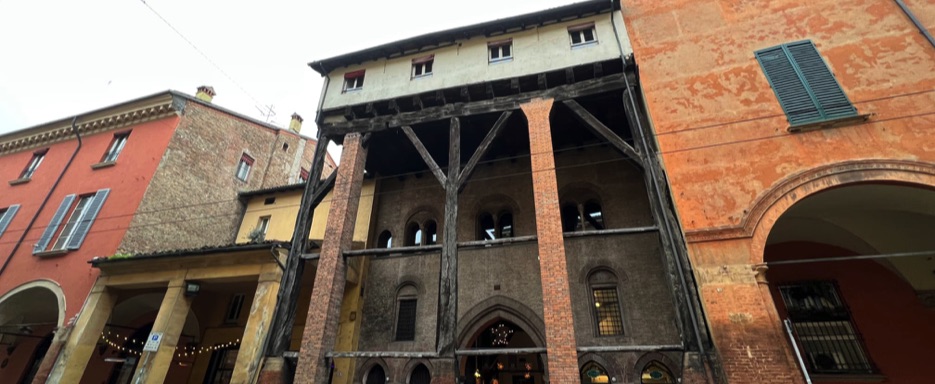
Bologna is the lively, historic capital of the Emilia-Romagna region in northern Italy. I discovered its charm by walking through the medieval streets with my best friend, exploring every corner of this enchanting city.
An important part of Bologna’s medieval history is the Alma Mater Studiorum University, founded in 1088, making it the first university in Europe and a landmark of knowledge and culture.
Known as the “City of Towers” and the “City of Porticoes”, Bologna delights visitors with its rose-colored buildings, elegant squares, and charming streets.
The city is also a paradise for food lovers, with local specialties such as tagliatelle al ragù, tortellini in broth, green lasagna, mortadella, squacquerone, tigelle, gramigna with sausage, passatelli, Bolognese lasagne, Bologna schnitzel (cotoletta petroniana), friggione, and the world-famous Modena balsamic vinegar.
Join me on a walking tour through Bologna, one of Italy’s most lively and historic cities, rich in art, culture, and culinary delights. I explored the city with my best friend, discovering its medieval streets, stunning architecture, and hidden gems, accompanied by my dog.
Starting Point: Via del Baraccano & Teatro del Baraccano
Our walking tour begins at Via del Baraccano, at the Teatro del Baraccano, situated at the southern edge of Bologna’s formerly walled center. Nearby, the Madonna del Baraccano Sanctuary, a Renaissance-style Roman Catholic church located at Piazza del Baraccano 2, welcomes visitors with its beautiful architecture.
Piazza Santo Stefano & Palazzo Isolani
Walking towards Piazza Santo Stefano, one of Bologna’s most beautiful squares, we see the Palazzo Isolani, a historic 16th-century palace renovated between 1451-55 in the Tuscan style of Lapo Portigiani. Inside the Corte Isolani, restored within two 20th-century palaces, elegant shops and restaurants create a charming courtyard atmosphere. Piazza Santo Stefano, also known as Piazza delle Sette Chiese, is triangular and dominated by the monumental Basilica of Santo Stefano, surrounded by a few cafés and restaurants.
Piazza Maggiore & Historic Buildings
Next, we arrive at Piazza Maggiore, the heart of Bologna, surrounded by historic and monumental buildings:
• Palazzo del Podestà, a historic civic building, central to city administration.
• Basilica of San Petronio, the main church of Bologna and one of the last Gothic religious buildings of medieval Italy.
• Palazzo d’Accursio, a historical palace housing municipal offices and cultural exhibitions.
Piazza del Nettuno & Sala Borsa Library
Adjacent to Piazza Maggiore is Piazza del Nettuno, famous for the Fountain of Neptune, a monumental civic fountain constructed by Jean de Boulogne. Nearby, the Sala Borsa Library combines ancient architecture with modern public spaces, serving as a center for reading, research, and cultural events.
Via Massimo d’Azeglio & Lucio Dalla
Walking along Via Massimo d’Azeglio, a street connecting Piazza Maggiore to Porta San Mamolo, we sense the medieval charm with elegant shops and cafés. Along this street, a musical room and marble star memorial honor Lucio Dalla, the celebrated Italian singer-songwriter and musician.
Alma Mater Studiorum – University of Bologna
A short walk brings us to the Alma Mater Studiorum, founded in 1088 and considered the oldest university in the Western world. Its historic courtyards and streets reflect centuries of academic tradition and intellectual achievement, making it a vital part of Bologna’s heritage.
Via Marsala & Palazzo Grassi
Along Via Marsala, we encounter Palazzo Grassi, a Gothic-style, 13th-century palace originally owned by the Canonici family, later acquired by the Grassi family in 1466. The palace showcases Bologna’s aristocratic past and medieval architecture.
Porticoes of Bologna
Bologna is famous for its porticoes, arches of different ages that line many streets. These tall and spacious walkwaysshelter private dwellings, shops, and cafés, blending functionality with historical elegance. Walking under the porticoes offers a sense of the city’s medieval charm and lively urban life.
Basilica of Santa Maria dei Servi & Piazzetta dei Servi di Maria
Along a major road stands the Basilica of Santa Maria dei Servi, a Gothic architectural masterpiece and an important musical chapel for liturgical events, particularly at Christmas. Next to it, the Piazzetta dei Servi di Maria, located at the corner between Piazza Maggiore and Via Guerrazzi, offers a quiet spot to admire the basilica and soak in Bologna’s medieval streets.
Ancient Walls & Gates of Bologna
The ancient walls and gates of Bologna provide a tangible connection to the city’s medieval past. These structures once protected the city and controlled access, and today they remain important historical landmarks, linking Bologna’s rich history with its modern urban life.
Ending the Walk: Il Caffè dei Gomittoli
At the end of our walk, we stopped at Il Caffè dei Gomittoli, a charming knitting café with balls of wool and cotton on display. We enjoyed a delicious cappuccino and croissants, while my dog had water and a biscuit. It was the perfect ending to a wonderful tour, blending history, culture, and cozy local experiences.
This walking tour of Bologna offers a rich mix of medieval streets, historic squares, Gothic churches, elegant palaces, porticoes, and local charm, giving visitors a step-by-step experience of the city, perfect for a blog or photo videos documenting the adventure.