

Naviglio Martesana Bike Trail: a ride through history and nature from Milan to Trezzo sull’Adda, Lombardy, Italy
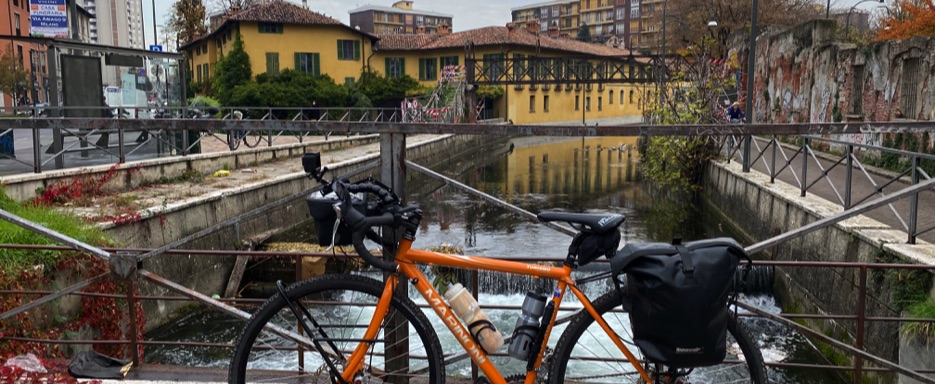
Cycling along the Naviglio Martesana, also known as the Naviglio Piccolo, means starting from the heart of Milan, amid traffic and urban bustle, and following the slow flow of an artificial canal that tells centuries of history.
Once a waterway for transporting goods, today the Naviglio is a recreational and tourist route, where picturesque villages, blooming villas, ancient water wheels, and poetic corners succeed each other like pages of a living book.
Up to the Adda River near Trezzo sull’Adda, every kilometer offers a meeting between history, nature, and the gentle suspension of time, turning a simple bike ride into an authentic journey through past and present.
History and Ingenuity along the Naviglio Martesana
The history of the Naviglio Martesana dates back to the 15th century: commissioned by Duke Francesco Sforza and completed in 1496 during the reign of Ludovico il Moro, it carries the visionary genius of Leonardo da Vinci, who refined its engineering solutions.
For centuries, it was Milan’s main commercial waterway; today it retains the charm of an infrastructure that tells a continuous dialogue between water, human ingenuity, and the landscape.
The Beginning of the Adventure: Cascina de’ Pomm
My adventure began just a few steps from the Central Station, in the heart of Milan, among urban traffic, quickly entering an unexpectedly peaceful landscape.
I rode along the Naviglio Martesana, documenting the adventure with my action camera, immersing myself in the colors and scents of the fields and villages along the route.
Departure: Cascina de’ Pomm
This historic farmstead on via Melchiorre Gioia, dating back to the 15th century, is one of the oldest still present in Milan. Walking through quiet courtyards and ancient arches feels like stepping back in time, to a world where city and countryside coexisted harmoniously.
Leaving the city, the Martesana cycle path winds through cultivated fields, groves, and elegant period villas. Between Cernusco sul Naviglio and Cassina de’ Pecchi, you can admire historic residences such as Villa Alari Visconti di Saliceto, Villa Biancani Greppi, and Villa Uboldo, with well-kept gardens and elegant façades. Small villas and farmhouses from the 17th–18th centuries punctuate the route, adding a touch of history and charm to the ride.
Tra borghi, ville e ruote idrauliche
In Cologno Monzese and Vimodrone, elegant villas, tree-lined avenues, and green parks precede the Lombard countryside, offering the first whispers of rural tranquility.
In Cernusco sul Naviglio, picturesque bridges and ancient locks tell the story of the area’s river past, while the water wheels, now silent, bear witness to the historic use of water.
Between Cassina de’ Pecchi and Bussero, fields, groves, and historic farmhouses invite photographic stops and moments of reflection.
In Gorgonzola, historic landing points, washhouses along the canal, and the wooden covered bridge transport visitors back in time. The town, famous for the cheese that bears its name, narrates its riverine history accompanied by the slow flow of the water.
Water, History, and Photography along the Canal
In Inzago, the cycle path crosses the bridge and continues along the Naviglio; the town’s landmark tower, a historic civic tower visible from afar, dominates the panorama and reflects in the calm waters of the canal. Though no longer operational, it is an important point of reference and adds historical charm to the route.
Towards Cassano d’Adda, the path alternates between pedestrian and cycling sections, offering enchanting views of stone bridges and reflections on the water.
In Groppello d’Adda, the famous large water wheel, called “el rudun,” is located on the banks of the Naviglio. The current wheel is a reconstruction from 1989, faithful to the original of 1618, probably designed by Leonardo da Vinci and once used to irrigate the fields.
Next to the bridge, the old washhouses are still visible. The interior area is fenced off and not always accessible for close-up visits, but the wheel is clearly visible from the outside.
While taking photographs, a local volunteer, although the site is normally closed to the public, let me in and shared its history a genuine moment that made the experience even more special, revealing hidden and unique details.
Arrival in Vaprio d’Adda
Continuing along the Martesana cycle path, you enter the territory of Vaprio d’Adda, where nature reasserts itself. In this section, the path runs along a strip of land between two watercourses: the narrow, linear Naviglio Martesana and the wider, majestic Adda River. Tall trees on the right separate the cycle path from the riverbank, adding shade and charm to the landscape.
Arriving in town, you can see Vaprio d’Adda on the right and, ahead, the calm waters of the Adda River flowing past the houses. A long pedestrian and cycle bridge allows access to small parks along the riverbank.
Among these, the park of Villa Pagnoni stands out, facing the water with a striking structure of ocher arches, a salmon-colored turret, and dark green decorative details, making the villa particularly picturesque and evocative.
Along the canal, there is also another water wheel, probably from an old mill or used for energy production. Behind it rises Villa Castelbarco, originally built in the 12th century to house a convent.
Among Trees and History: Crespi d’Adda Worker’s Village
After Vaprio d’Adda, the route continues toward Trezzo sull’Adda, through shaded areas with trees and fields, where the paved cycle path remains flat and enjoyable for all.
Nature here provides a relaxing setting, while the waters of the Naviglio Martesana continue to flow parallel to the path, creating reflections and sounds that accompany the ride.
The path passes near the Crespi d’Adda Worker’s Village, a UNESCO World Heritage Site. The village is a unique example of 19th-century industrial and residential architecture, built around the Crespi textile factory to house workers and their families.
From the cycle path, you can admire the workers’ houses, the Taccani hydroelectric plant, and the green spaces that compose this small jewel of industrial and urban history.
This section represents a perfect balance between nature and history, making the ride a slow and immersive experience, among shady trees, calm waters, and unique historical testimonies.
Final Stop: Santuario della Divina Maternità and Taccani Hydroelectric Plant
The route culminates in Trezzo sull’Adda, where the Adda River continues to dominate the landscape. Here stands the Taccani Hydroelectric Plant, built in a scenic position directly above the river, a perfect example of the coexistence of industrial ingenuity and natural beauty.
Nearby, the Santuario della Divina Maternità, located in the Concesa district, completes the historical and spiritual setting. The nearby dam and locks tell the ongoing dialogue between the river’s waters and human hands.
This area features signage marking the official end of the Martesana cycle path, but for those wishing to continue the adventure, the area serves as a hub for other cycling routes: it is possible to continue along the Adda River northwards, reaching the Brianza lakes and Lake Como, turning the ride into a longer, panoramic experience..
Return to Milan
Although it would have been possible to continue towards Lecco, I chose to return to the heart of Milan, letting the scents of the fields, the picturesque villages, and the slow rhythm of the canal accompany me, completing a ride that blends history, nature, and scenery.
Conclusion
Cycling along the Naviglio Martesana is not just a sport: it is a journey through history, nature, and charming villages. The route is flat and well-marked, suitable for both cyclists and walkers, passing historic villas, fields, groves, and attractions such as the large Groppello water wheel and the Crespi d’Adda Worker’s Village, a UNESCO heritage site.
A simple ride becomes a small journey through time, where history and nature flow together, following the slow rhythm of the water and ancient hydraulic machines, leaving travelers with memories of emotions, views, and unique details along the entire route.
📌 Route Information
• Start & Finish 📍: Cascina de’ Pomm (Milan)
• Route Type 🔁 : Out and back to Trezzo sull’Adda
• Dstance 🚴 : approx. 37 km (one way)
• Total distance 🚴 : 81.18 km (round trip)
• Average time ⏱: 2.5–3.5 hours (one way, with stops)
• Difficulty 💪: easy, flat, suitable for all
• Surface 🛣️ : mostly paved, with short unpaved sections
• Main stops ⭐ : Cascina de’ Pomm → Cologno Monzese → Vimodrone → Cernusco sul Naviglio → Cassina de’ Pecchi → Bussero → Gorgonzola → Bellinzago Lombardo → Inzago → Groppello d’Adda → Vaprio d’Adda → Trezzo sull’Adda
• Filmed with 🎥: Action camera / GoPro
• Trail Map 📍: View map – Coming Soon
🎥 Telling the Journey
Using my action camera, I filmed the first stretches of the Naviglio Martesana cycle path, from the urban chaos of Milan to the tranquility of the Lombard countryside. Each shot tells the story of the gradual transition from city to nature, among historic villas, picturesque villages, and the quiet waters of the canal.
Video 1
Video 2
Video 3
Video 4